Showing posts with label sentidos. Show all posts

Tuesday, January 16, 2018

Look, but don´t touch! ...Really?

Why to kill the curiosity in Early Childhood?

Exploring and experimenting are key in our first years of life. Our own nature pushes us to learn by seeing, touching, smelling, listening, tasting,... all our senses are needed in this process.


Everyday in my classroom I can see my students enjoying with the hands-on activities, the materials in the workstations,... They always approach the stations of learning and attracted by the materials begin to use them and admired make comments to others. These experiences are precious since they develop many skills as cognitive, communicative, social,... It´s sad when sometimes we hear just at this moment the voice of the teacher/parents/legal guardian to keep silent and to make a line, indicating "it is not worth touching, just seeing".

Many theories of learning tells us that the child's learning in our early years has to do with our thinking levels; it is necessary to keep in mind the object and not only to observe it but to interact with it if we want them to question, reflect, imagine, generate ideas,... The object, by itself in front of the person who learns about it, does not serve as mediator of learning, it is not through a merely contemplative act (visual) as knowledge is constructed, that is, the object is an instrument whose function is to trigger cognitive development. (see my post about Bloom´s Taxonomy)

The first impulse of children when they are in front of an object is to touch it and ask. These are opportunities to foster the intellectual curiosity that surely leads to cognitive development. Touching the object is synonymous with questioning about it. For this reason, the adult must be close to them to answer their questions, to ask them questions, to explain its characteristics.  The role of the teachers (and educators/parents/legal guardians) is to solve the doubts of children, trying to offer real explanations that stimulate their curiosity and cognitive processes.

Learning from the use of objects (Vigotsky, 2000)

Parents/legal guardians/educators should invite children to manipulate the objects and ask him interesting questions that awake their interest and stimulate their expression (communicative skills), reflection and analysis (thinking levels).

In fact there are those researchers who affirm that intelligence is measured by the use of instruments to solve problems, based on the Latin origin of the word: 

inteligere, composed of intus (between) and legere (choose); 

so we can deduce that being smart is knowing how to choose the best option among those given to solve a problem
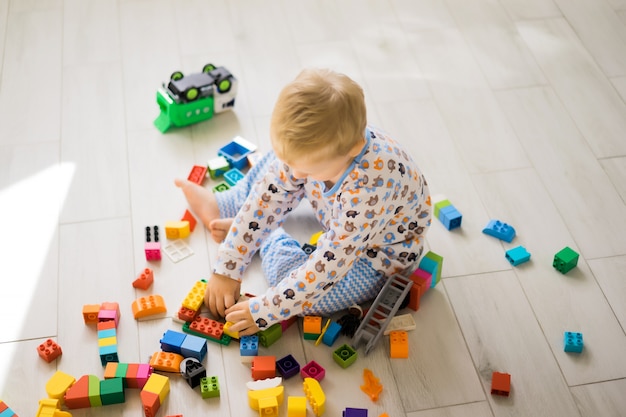

When children look at an object they immediately have the desire to understand it, and manipulating it is the best way to do it. The work in the classroom must include the contents within natural situations making connections with situations of real life and this implies the interaction of the children with real objects.

To prevent children from mistreating objects, we are only showing our dark side of the teaching. If it is a very delicate or dangerous object for the child, we must help him with care to touch him and explain the reasons for it.
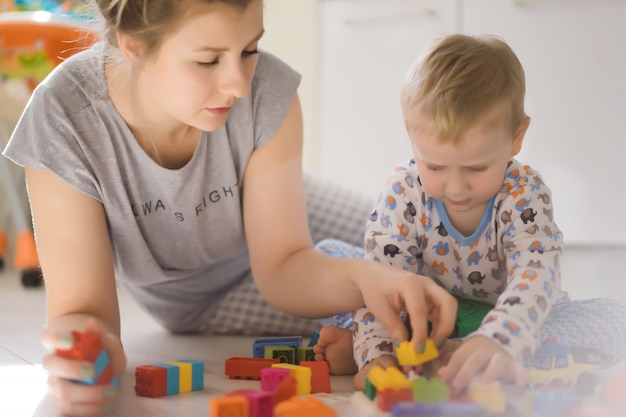
Interact with the reality is the basis of learning, questioning reality and recreating it to understand it is the body, develop cognitive processes and generate knowledge is its maximum expression. Even adults need to touch objects, for example: to show us a shirt  is not enough to tell us it is cotton, we immediately touch it. To ask toddlers/young children not to touch and only observe is to attempt against their nature and their right to learn. 

Tuesday, October 10, 2017

HANDS-ON and SENSORY activities and its importance of the development


In one of my posts about the five senses we described the importance of the five senses in the development of early childhood, that is why the early childhood curriculum offers this unit every year. Besides, previously, we talked about the importance of visual development, and now it´s time to talk about another important sense: touch.

Sensory development is a very important process within the life of each person, it contributes in a positive way in the learning of the human being. Within this, there is the sensation, which is in charge of receiving information from the outside through our senses, we also have the perception, which plays a very important role because it processes the information in the brain to be transmitted. As discussed earlier, sensory development is fundamental in learning.

There are several conceptions about this. We have taken Piaget's theory to be able to analyze learning, above all, the sonoradiomotor stage that has to do with the senses in particular. There are several factors that can inhibit sensory development causing it to not occur in the best way in some people. Throughout this chapter will be made known what these are and why they affect in this process.

Friday, September 29, 2017

Visual Stimulation

Visual Stimulation

How to teach your child to see better

Infant visual stimulation help children see better. The more vision is used, the greater the likelihood of better visual functioning. The driving thrust of visual stimulation is to help the child develop all of his physical and emotional abilities.

From birth, children use visual skills to progressively conquer their environment. The eye gives them the necessary information about the size, shapes and colors of the objects and people around them and the movements they perform. The visual stimuli they receive invite them to explore space, to move the toy and to smile at their mother as she approaches.

Good vision also helps them improve their eye-hand coordination by picking up objects within their reach or by looking at them. His first steps are facilitated by the vision, and the conquest of space and the exit to the unfamiliar environment demand a visual capacity running at full capacity.


Early visual stimulation in infants

The child with visual difficulties should learn all this as well, but he needs guidance in the way of this learning. With an early stimulation of the visual learning processes this goal can be achieved and avoided that this visual deficiency can lead to alterations in his/her personality because the visual disability is also multifunctional. With the early stimulation of visual-motor skills the ability to think and with it the opportunity to deal with people also varies. This facilitates social behavior and the ability to assert oneself in a group.


The evolutionary visual acuity of infants

The development of visual acuity is necessary for the evolution of the accommodation. Visual acuity improves by three months and approaches the adult's own values ​​at six months. When two years later, the child uses his vision in increasingly complex tasks, it is usually discovered that there is a problem.


Learning to see better in childhood

Visual stimulation is a technique that requires the preparation of an individualized program of activities that follows a sequence of visual experiences aimed at seeking an improvement in visual functioning. 


How to stimulate the child's vision

The more vision is used, the greater and better visual functioning. Therefore, visual stimulation will be more likely to succeed, if you take these recommendations into account:


- Short age. The smaller the child, the greater the likelihood of rapid progress in the use of vision.
- Motivation. Girls and boys need to be encouraged to use their vision in all tasks and activities so that they can progress.
- Keep in touch. Teach the low vision child to work by keeping eye contact with objects and especially with people.
- Explore. Stimulate outdoor exploration in the playground or in physical education classes allowing normal falls caused by the mis-calculation of distances. Overprotection should be avoided.
- Promote reading. Even when you read very slowly, moving your head or book instead of your eyes. If you get tired and skip lines or lose the thread you can switch from task to one less visually demanding.
- Contrasts. White paper and black ink provide the highest visibility and contrast.
- Glasses and magnifying glasses. They favor the use of a person's vision, but can not return normal vision.


Visual Discrimination implies the ability to determine the exact characteristics of a form compared to others of similar characteristics. In the process of learning to read, it is important to have developed visual discrimination, otherwise they would encounter the following difficulties: Confusion of similar words. They confuse similarities and differences. Errors in words with similar beginnings or endings We propose to practice Visual Discrimination in children with these illustrative and entertaining exercises.

Thursday, September 28, 2017

Mis 5 super poderes, mis 5 sentidos

Nuestros super poderes se aprenden mejor con una cancion, y si no diselo a ellos. En clase, aprendemos los cinco sentidos (en espanol) con este divertido video de La Payasa Agapita.


Explorando y usando los cinco sentidos podemos ayudar a nuestros mas pequenos en su desarrollo cognitivo. Durante la etapa de la infancia sus cerebros estan en desarrollo, por lo que es el momento oportuno para ayudarles. De hecho, los estimulos que provienen del exterior, a través de sus experiencias con sus sentidos (vista, oído, olfato, tacto y gusto) les ayudan en todo este proceso. Estas experiencias les ayudan a construir conexiones permanentes y fuertes en el cerebro.

Desde el principio, a medida que las comunicaciones neuronales en el cerebro del infante se fortalecen a través de experiencias repetidas, se forman conexiones permanentes que estructuran la forma en que un niño aprende. Si no se utiliza un camino, se elimina basándose en el principio de "usarlo o perderlo". Las cosas que usted hace una sola vez, bien o mal, son algo menos probables tener un efecto en el desarrollo del cerebro.

A continuación proponemos algunas actividades para cada uno de los sentidos:

Gusto

Su hijo desarrollará sus preferencias de gusto basado en lo que se alimenta temprano en la vida. No es genético, se ha aprendido. La investigación concluye que los adolescentes y los adultos eligen alimentos y bebidas basándose en lo que fueron alimentados como infantes.


  • Ensalada de frutas
Hacer una ensalada de frutas. Pregunte: ¿Ves diferentes tipos de fruta en el tazón? Elija diferentes tipos de fruta y permita que su hijo tome un bocado de cada uno. ¿Qué sabor tienen? ¿Has tenido esa fruta antes? ¿Sabe bien?


Papilas gustativas

Hay 4 papilas gustativas principales situadas en nuestras lenguas amargas, amargas, saladas, dulces. Permita que su hijo pruebe diferentes tipos de comida para ver qué gustos prefieren. ¿A qué sabe esto? (amargo, amargo, salado o dulce)

Oído

Su hijo usa sus oídos para recibir información sobre el mundo que les rodea. Desarrollar la capacidad de escucha con atención les ayuda a obtener información importante de usted, de sus maestros y todas las personas a su alrededor. Al igual que otras habilidades, aprender a escuchar requiere práctica. Proponemos las siguientes actividades para reforzar este sentido.

  • Juegos de Escuchar
Puedes jugar con un tablero o  cartas con tu hijo para ver lo bien que escucha. Escuchar es una habilidad importante cuando juegas. Otra actividad eficaz sería ocultar un reloj con sonido en una habitación y ver si su hijo puede encontrarlo.

  • Modelado
Usa tus manos y haz patrones de palmas juntos. Lleve la secuencia de aplausos y aliente a su hijo a repetirla. Una vez que cada uno ha tenido un turno en la dirección de las secuencias de aplauso, intente hacer lo mismo usando las campanas. ¿Es más difícil repetir la secuencia de la campana? ¿Te gusta escuchar las campanas? ¿Qué sonido es más fuerte?

Ejemplo de una secuencia de aplausos: Aplauso lento, lento-rápido, rápido.

Tacto

Nos sentimos principalmente a través de nuestras manos y pies. ¿Sabías que los pies tienen miles de nervios que van directamente al cerebro? Deje que su niño se sienta con los pies; es tan importante como sus manos. Su niño aprende sobre su ambiente a través del tacto. Aprenden sobre su cuerpo y cómo comunicarse con otros. La participación en este tipo de actividades mejora sus habilidades motoras finas. Estas habilidades le ayudarán a su hijo a sujetar un lápiz, atar sus zapatos, abotonar su ropa y usar tijeras.

  • Dominó con textura
A todo el mundo, o al menos a la mayoría, le encanta el dominó. Anime a su hijo/a a usar sus dedos para tocar y sentir los bloques y combinarlos de acuerdo a cómo se sienten.

  • Pintura con los pies
Remangue el pantalón de su niño/a, y pídales que pasen en una cacerola o bandeja con up poco de pintura de su color favorito, para experimentar la sensación de la pintura entre sus dedos del pie. Pregúntele a su hijo cómo se siente. ¿Es suave o áspera? ¿Es frío o caliente? ¿Es pegajoso o suave?


Olfato

Después del nacimiento, el sentido del olfato es una de las primeras cosas que le une a su hijo. Con el tiempo, ciertos aromas se vuelven reconfortantes porque son familiares, y esto puede ser la razón por la cual su hijo puede preferir que sus objetos de seguridad permanezcan sin lavar. Están unidos al olor de su manta o oso.


  • Ojos vendados
Encuentre algunos perfumes familiares como café, extractos usados ​​para hornear, etc. Haga los ojos a los ojos a su niño y coloque el olor debajo de su nariz. ¿Qué huele? ¿Conocen el olor?

Vista


Los ojos de su recién nacido son físicamente capaces de ver al nacer, pero su cerebro no está listo para procesar la información visual, por lo que las cosas permanecen borrosas por un tiempo. A través de sus experiencias, empezarán a conectar el significado con las señales visuales que se encuentran en su entorno. Cuando su hijo juega juegos que implican la vista que están desarrollando las habilidades de alfabetización temprana. Los juegos visuales les ayudan a reconocer objetos, palabras, patrones y consecuencias, así como desarrollar su memoria.

  • Veo, veo, ¿qué ves?
Con este divertido juego usamos nuestra vista para intentar descubrir, a modo de adivinanza, lo que esta en nuestro entorno. 
  • Veo, veo con los libros

Con los libros podemos juegar al "veo, veo..." de una manera muy divertida. Hable sobre las diferentes cosas que ve en las diferentes páginas. 

  • Juegos de Parejas
Juegue un juego que empareje con su niño. Ellos están usando sus ojos para jugar estos juegos y mejorar sus habilidades de discriminación visual.