As a PreK teacher I know that children always want to play and have fun. However, we can´t find so many games to offer them without spending so much money.
Pop-corn race/Carrera de palomitas

Materials/Materiales:
- straws/pajitas o popotes
- tape/cinta
- popcorn/palomitas
Instructions/Instrucciones:
With the use of straws we blow pop-corns to win our race on the dinning table. We can use the tape to limit our lanes. You can add obstacles when you master the simple races, it will be so much fun!
Ready, Set, GO!
Con el uso de las pajitas/popotes soplamos las palomitas para ganar nuestra carrera en una mesa. Podemos usar cita para marcar los límites de nuestro camino. Puedes añadir obstáculos (platos, vasos,...) cuando domines las carreras simples, será muy divertido.
¡Preparados, listos, YA!
- tape/cinta
- popcorn/palomitas
Instructions/Instrucciones:
With the use of straws we blow pop-corns to win our race on the dinning table. We can use the tape to limit our lanes. You can add obstacles when you master the simple races, it will be so much fun!
Ready, Set, GO!
Con el uso de las pajitas/popotes soplamos las palomitas para ganar nuestra carrera en una mesa. Podemos usar cita para marcar los límites de nuestro camino. Puedes añadir obstáculos (platos, vasos,...) cuando domines las carreras simples, será muy divertido.
¡Preparados, listos, YA!
Movies/Películas

Materials/Materiales:
No materials are needed/No son necesarios.
Instructions/Instrucciones:
Distribute the participants in two teams. One members of the team -in this case a child- thinks about a movie and tells it to the members of the opposing team with mimic for a minute. If after this time s/he has not succeeded, the opposing team scores a point.
3, 2, 1...Action!
Se hacen dos equipos. Uno de los miembros del equipo -en este caso un niño/a- piensa en una película y se les cuenta al otro equipo. Solo se puede usar la mímica (no palabras) por un minuto. Si el tiempo se acaba y no lo han acertado, el equipo contrario gana un punto.
3, 2, 1... ¡Acción!
Pictionary

Materials/Materiales:
- Paper/papel
- pencil/lápiz
Instructions/Instrucciones:
Similar to the former activity: Movies. Distribute the participants in two teams. One member of the teams -in this case a child- thinks about something and tells it to the members of the opposing team with drawings for a minute. If after this time s/he has not succeeded, the opposing team scores a point.
Guess!
Parecido a la actividad anterior: Películas. Se hacen dos equipos. Uno de los miembros del equipo -en este caso un niño/a- piensa en una cosa y se les cuenta al otro equipo. Solo se puede usar dibujos (no palabras) por un minuto. Si el tiempo se acaba y no lo han acertado, el equipo contrario gana un punto.
¡Adivina!
Who is who?/¿Quién es quién?

Materials/Materiales:
- Pictures/fotos
Instructions/Instrucciones:
Distribute the participants in two teams and pictures of the family to each team. One member of the teams -in this case a child- chooses a picture and the members of the opposing team asks questions to guess who´s in the picture. If after this time s/he has not succeeded, the opposing team scores a point.
Guess who!
Se hacen dos equipos y se reparten fotos de la familia a cada equipo. Uno de los miembros del equipo -en este caso un niño/a- elige una foto y miembros del otro equipo deben adivinar de quién se trata. Si el tiempo se acaba y no lo han acertado, el equipo contrario gana un punto.
¡Adivina quién!
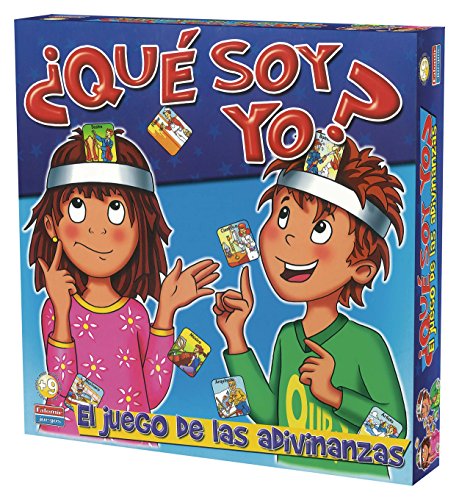
- Pictures/fotos
Instructions/Instrucciones:
Similar to the former activity. Distribute the participants in two teams and pictures of the family to each team. One member of the teams -in this case a child- chooses a picture that is stick on his/her back and the members of the same team will help him/her with cues to guess who´s in the picture. If after this time s/he has not succeeded, the opposing team scores a point.
Who am I?/¿Quién soy?
Materials/Materiales:
- Pictures/fotos
Instructions/Instrucciones:
Similar to the former activity. Distribute the participants in two teams and pictures of the family to each team. One member of the teams -in this case a child- chooses a picture that is stick on his/her back and the members of the same team will help him/her with cues to guess who´s in the picture. If after this time s/he has not succeeded, the opposing team scores a point.
Guess who!
Parecido a la actividad anterior. Se hacen dos equipos y se reparten fotos de la familia a cada equipo. Uno de los miembros del equipo -en este caso un niño/a- elige una foto y se la coloca en la espalda. Los miembros de su mismo equipo, con algunas claves, les ayudarán a adivinar de quién se trata. Si el tiempo se acaba y no lo han acertado, el equipo contrario gana un punto.
¡Adivina quién!
Espero que en los días de lluvia y nieve te ayuden a pasar un buen rato con tu familia.
¿Cuál es tu juego favorito?
Espero que en los días de lluvia y nieve te ayuden a pasar un buen rato con tu familia.
¿Cuál es tu juego favorito?
