Showing posts with label reading. Show all posts

Friday, March 9, 2018

What to do with my first book?

After the book fair at our school, children are excited to read (or pretend to read) their amazing books. Parents and educators need to know how to motivate them during the reading activity.

Make questions. 

Children develop language faster when they are asked to use it. After asking a question, wait until the child has the answer prepared; give it time. He confirms what he means by using some terms that he does not know. Pay more attention to the meaning than to the specific words. I want to share some steps or questions:
  • First question: 
What, do you think, will the book be about? Why?

  • Next question 
Look at the picture on the first page. What can you tell about ______? (focus on the character(s), events,…)

  • Next question 
Read the title -if they can´t read, we can invite them to recognize letters-.
Predict what you think this book will be about.

  • Next question 
Let´s start to read.

Now depending on their level (letter-sound recognition, reading) you can invite your kid to recognize letters and sounds or to read.

  • Next question 
What can you tell about the next page?

We repeat the last two steps for the rest of the book, changing the focus of the question: characters, actions, details,…

  • The end
Before reading, ask him/her about it. What do you think about what´s happening now?

After reading, try to invent a new ending.


After reading activities:

Tell him his own story. U
se photo albums of the child as inspiration to talk about the event portrayed. The spring break, summer holidays or the trip to the house of the grandmother may well become a work of fiction, but at the same time they develop a sense of narration in it.

Become a transcriptionist
Ask the child to dictate stories for you to write or write a letter for a friend or relative. Tell him to scribble his signature or write his name as best he can. Your ability to write will go behind your imagination for many years, so do not let that stop you. Help him write down his thoughts, without forgetting that they are valuable and that the written word is the way others can know his ideas.
  • Create your flat character like "Flat Stanley"
  • Make a "glossary" with the main words and vocabulary of the book. It´s important to add images and pictures to the words and their definitions.
  • Dramatize and perform some scenes of the book.
  • Create the costume and details of your favorite characters.
  • Create a new story with your favorite characters.
  • Record or videotape your reading session and share with others.

Wednesday, January 10, 2018

Reading before bedtime

What to do after holidays to have our routines back?

After our winter break we need to come back to our habits and daily lives. 

Sometimes, the time to go to bed becomes a real nightmare, especially with the little ones. After a story, they want another and another... The stories are specially designed to make our children yawn and get them to sleep or to close their eyes while we read before bedtime. Here you have a small selection of perfect books to read at the end of the day that will surely help you in this arduous task. The selection of the books are proposed in the article 10 cuentos infalibles para ir a dormir (free and non-commercial translation of some parts)

Some of the stories are played by animals and others by children, some are realistic and others more fantastic, some are longer and others are shorter ... but they are all about emotions (sadness, optimism, hatred, the surprise, the calm, the boredom ...), to help the children to know their feelings and manage them.

Cuentos para ir a dormir para niños


A todos los niños y niñas les gusta escuchar cuentos antes de dormir y más cuando los personajes viven aventuras en barcos o en magníficos castillos llenos de princesas.

All children like to listen to stories before they sleep and more when the characters live adventures on boats or in magnificent castles full of princesses.

Un beso antes de dormir


Todos los bebés animales besan a su madre antes de dormir. Un libro de cartón con tiernas ilustraciones para leer a tu hijo antes de ir a dormir.

All animal babies kiss their mother before sleeping. A cardboard book with cute illustrations to read to your child before going to sleep.

El libro de las buenas noches


Un libro increible para ir a dormir en el que se cuenta al niño cómo duermen diferentes animales.

An amazing book to go to sleep in which the child is told how different animals sleep
.

Cómo dormir a tu león


Seguro que a tu león le ocurre lo mismo que a Leoncete: por muy cansado que esté, ¡nunca quiere irse a la cama! No te preocupes, Guille sabe bien cómo hacerlo. ¡Abre este libro y descúbrelo!

Surely your lion is the same as Leoncete: no matter how tired he is, he never wants to go to bed! Do not worry, Guille knows how to do it. Open this book and find out!

Todos bostezan


¡Un libro ideal para los niños que se resisten a irse a dormir! Cada doble página presenta a un animal que, bostezando, nos muestra su enorme boca mediante un mecanismo de solapa, hasta que al final… ¡todos duermen! Un libro de compañía para compartir con tu hijo el momento mágico de irse a dormir.

An ideal book for children who are reluctant to go to sleep! Each double page presents an animal that, yawning, shows its huge mouth through a flap mechanism, until in the end?? everyone is sleeping! 
A companion book to share with your child before the magical moment of going to sleep.

El conejito que quiere dormirse


El cuento de El conejito que quiere dormirse es un nuevo método para que los niños se duerman. Traducido a varias lenguas, este libro revolucionario ha ayudado a miles de padres en todo el mundo a conseguir que sus hijos concilien el sueño gracias a las innovadoras técnicas psicológicas que aparecen a lo largo de la historia.

Escrito en un lenguaje sencillo, este libro logra que los niños se relajen y se queden dormidos antes incluso de que termine el cuento.

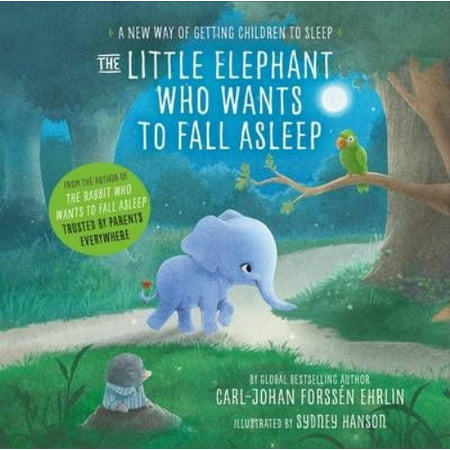
Y si quieres más, conoce el nuevo libro de Carl-Johan Forssén Ehrlin La elefantita que quiere dormirse


The story of The Bunny that wants to fall asleep is a new method for children to fall asleep. Translated into several languages, this revolutionary book has helped thousands of parents around the world to get their children to sleep thanks to the innovative psychological techniques that appear throughout history.

Written in simple language, this book makes children relax and fall asleep before the story ends.

And if you want more, know the new book by Carl-Johan Forssén Ehrlin The little elephant who wants to fall asleep.


Cuentos bonitos para quedarse fritos


Cuentos bonitos para quedarse fritos es un divertido libro recopilatorio de cuentos que llega para hacer frente a la insistente petición de todos los niños que quieren un cuento antes de acostarse (¡y sobre todo a la de los padres que quieren que sus hijos se duerman pronto!).

Beautiful stories to stay fried is a fun storybook compilation that comes to face the insistent request of all children who want a story before bed (and especially to parents who want their children to fall asleep soon !).

Mi Camita


Mi Camita es un álbum ilustrado que también puede servir de apoyo para vencer o superar otros miedos infantiles, como el miedo a los malos sueños, el miedo a la noche o el miedo a la oscuridad.

Este es un cuento que debería ser contado en el momento de ir a dormir, y preferiblemente en la propia cama del niño o niña. Aunque también puede ser utilizado en la guardería o en la escuela para inducir a los niños a reflexionar acerca del momento de ir a dormir.

Mi Camita is an illustrated album that can also serve as a support to overcome other childhood fears, such as fear of bad dreams, fear of the night or fear of the dark.

This is a story that should be told at the time of going to sleep, and preferably in the child's own bed. Although it can also be used in daycare or school to induce children to reflect on the time to go to sleep.


¡Uno más, por favor!


¡Pídele a tu hijo que escoja su «cuento corto a la carta» girando la rueda mágica de este libro! En ella encontrará sus personajes y sus escenarios favoritos: hadas, niños, ratones, bosques, lagos o castillos... Una vez que haya escogido los que más le gusten, tú podrás leerle el cuento en tres minutos y él, después de escucharlo y disfrutarlo, dormirá tranquilo y feliz.


Ask your child to choose his "short story on demand" by turning the magic wheel of this book! In it you will find your favorite characters and scenarios: fairies, children, mice, forests, lakes or castles ... Once you have chosen the ones you like the most, you can read the story in three minutes and s/he, after listening to it and enjoy it, will sleep calm and happy.


Sunday, October 8, 2017

Reading 1 - What is reading?

What is reading?

"In order to wish to read, the child has to know that reading will be useful to him, he/she must be convinced that the whole world will have wonderful experiences, he/she will dissipate his/her ignorance, help him/her understand the world and direct his/her destiny" 
(Quintanal Díaz, 1999)

As a teacher reading is a very important activity that involves school and family, so I´ll write some posts about this importance of this activity. This first article is about the definition of reading and the fundamental ideas that complement this definition.

Many authors define reading, José Quintanal Díaz (1999) defines Reading as "an activity of the first order that should be strengthened and, above all, it is necessary to learn." (free translation from the original quote)

Bernal Pinilla defines reading as "the action of deciphering the symbols of a message; understand their meanings; relate them to known meanings, appropriate some new element and develop them through the process of creativity. " (Bernal, 2011: 6-8). And he explains it to us in the following way:

1. Action to decipher the symbols of a message.
Image result for children deciphering symbols cartoon

Image of a child deciphering symbols


The act of reading is free, and in that sense the reader exercises his will, fulfilling a wish. On the other hand, reading implies the action of recognizing the signs of the message, and in the first term, the fact of knowing them. Knowledge of linguistic symbols is usually acquired in the early stages of schooling. That is, according to Quintanal Diaz reading requires an effort on the part of the subject who intends to read. 


Children tend to instinctively reject what is expensive, so it is the teacher's job to sweeten that effort and that the task of reading for the student is interesting, stimulating, natural, free, playful and enjoyable. At home, his/her family can help with the same features (we´ll dedicate another post about the importance of reading at home and tools and resources to use at home)

2. Action to understand the meanings of the message.
The action of reading goes beyond the simple decoding of symbols, which is useless without a true understanding. The reading process has a second, important stage, which consists in interpreting, assimilating, and comprehension of the written message. A process that is only achieved when the reader learns as a child to correctly decipher the signs. That is why it is the teacher's task to deliver the student in his/her infancy varied, attractive, meaningful and pleasant materials. And, of course, encourage them to deepen, to imagine, to fantasize and to relate what they read with what they know, that is helping them make connections. Making connections with their reality will active their background knowledge to build the new contents. This idea is called "scaffolding", we´ve posted an article about this. By reading and its daily practice, children will have the ability to be immerse naturally, easily and without trauma, into ever more complex texts. And more importantly, to take advantage of them and enjoy them in depth.

3. Getting familiar with known meanings. 
We can affirm that reading is learned by reading, that is, with practice.
Reading is a process that feedbacks; the more reading, the better the reader gets more familiar with the new meanings to those he/she already knew. This creates the possibility of interpreting with greater clarity, ease, depth and enjoyment of the new readings.

4. Taking some new element. 
Reading has a great virtue from the point of view of information. Reading gives to readers new ideas and knowledge that become part of them: each text gives us the opportunity of integrating to our cultural background new knowledge and new possibilities to analyze aspects of life that begins to know through what is read.

5. Developing creativity.
During the first years of life, for children it is fundamental  the contact with nature, with peers, etc... But there is no greater stimulus for the development of our creativity than reading. That puts the human being in contact with a thousand and some realities that would otherwise be impossible to meet at such a young age. Reading, in addition, allows us to unlimitedly develop imagination and fantasy, fundamental ideas of all creativity.

Thursday, September 28, 2017

Biblioteca Online para leer en casa juntos


Actualmente con la tecnologia podemos tener acceso a muchos recursos, por este motivo les ofrezco este articulo.

Segun la informacion obtenida por la web oficial de HoustonISD, Frogstreet nos ofrece una gran variedad de recursos. El plan de estudios del distrito para prekindergarten está alineado con las pautas de pre-kindergarten establecidas por el estado de Texas. Los estudiantes de Prekindergarten reciben instrucción en todas las áreas de lectoescritura, matemáticas, ciencias, estudios sociales, desarrollo social y emocional, habilidades motoras gruesas y finas, salud, artes visuales, música y educación física.

Para acceder a las bibliotecas temáticas así como a las bibliotecas de matemáticas y ciencias en inglés y español, los padres pueden visitar http://portal.frogstreet.com/

Correo electrónico: parent
Contraseña: parent


El programa de Frogstreet:

  • Proporciona una instrucción completa e integrada en todos los dominios.
  • Equilibra la instrucción intencional con el aprendizaje centrado en el niño.
  • Proporciona equidad-inglés y español-de materiales e instrucción.
  • Ofrece una rutina diaria fuerte que desarrolla habilidades sociales y control emocional.
  • Apuesta por el poder de una fuerte interacción maestro-niño para desarrollar un rico lenguaje oral y un amplio vocabulario.
  • Proporciona una secuencia continua y sistemático para la construcción de habilidades y conceptos.
  • Usa los principios de aprendizaje basados ​​en la investigación como piedra angular de la instrucción.

Otras plataformas digitales que ofrecen lecturas online son:


Todas ellas con una gran variedad de historias, no todas ofrecen sus cuentos en ambos idiomas, pero igualmente es una oportunidad para pasar un rato divertido y leer en familia.
¿Cual fue tu historia favorita? ¿Por qué? 

Caracteristicas del estudiante que le gusta leer:


Como se ve en la imagen, los beneficios son muchos y se reflejan tambien en los resultados academicos, ya que la lectura amplia el vocabulario facilitando la comprension de la materia a estudiar. Otro aspecto muy importante en los estudiantes que le gustan leer -y su relacion con las buenos resultados- es su capacidad de explorar y descubrir cosas nuevas, ya que al comenzar la lectura de nuevas historias, nuestra curiosidad nos empuja a saber mas. Por consiguiente, nuestras ganas por saber se extenderan a otros campos de nuestra vida: la escuela.

Como resumen compartimos este video que habla sobre la lectura en familia.


Thursday, September 21, 2017

Love for reading in Prek & Kinder

HOW TO PROMOTE READING FROM CHILDREN?


Early Childhood Education is the foundation of everything, including the love of reading.

Our children love to be read and told stories, but we can do many more for them, such as those proposed here:

To start talking about READING, and they way we can have fun by doing so, we can start with an important general idea: The need of reading ALSO after school.

Why isn't the family going to help with reading?
The family environment is an important factor in helping children with learning, in general. Families can contribute to provide an environment that encourages positive developments in the reading of the youngest students:
  • Talk with your children. Gradually they will increase their vocabulary, stimulate them to ask questions about everything that interests them, surround and answer them. The more words they hear the more words they will know and the more words they can use in their daily conversation.
  • Listen to them and teach them how to listen to others. The more you talk and appreciate what you say, the better you can develop appropriate language patterns.
  • Read them. Every time you read, you are developing your love and interests for books and for reading; by reading you are helping them acquire a more elaborate language, which is ideal for their intellectual development.

HERE YOU HAVE SOME IDEAS THAT CAN HELP YOU TO GET IT

  • Turn off the TV. Make it normal to have it turned off. Turn it on only to see a specific program. Television, in addition to distracting attention, does not encourage reading.
  • With younger children, look at children's picture books and tell stories. Stay alert to what you are interested in each time, to provide books that speak of it.
  • When you start reading, help you choose books of interest. You can ask your teachers for information, in libraries or bookstores.
  • After reading a book, talk about it together. Let him realize that for you the book is an important thing, as it will be for her or him.
  • Often visit the library with your son or daughter. Explain how and where you can get the books, and where you should leave them. Give him time to look at them and read them, even if he does not know the letters yet.
  • Have your daughter or child see you enjoying a book, magazine or newspaper. Tell them what you think about reading and invite them to participate.
  • Read with him or her for at least 15 minutes a day. EVERYDAY. And value these moments as true acts of communication and fun; never as an obnoxious obligation.
  • Take advantage of the moment when your sons and daughters go to read stories and stories with them. Get accustomed to reading a few minutes every night.

CONCRETE READING ACTIVITIES THAT WE CAN DO AT HOME

  • Read to your son or daughter. Show them the various forms of literature through the writings: stories, poetry, comics, comics, journalistic narration, ... Show them also different texts that we can see at home customarily: bills, letters, recipes, cinema, the notes we send from school, and all the written texts you have.
  • The stories are the first contact of the boy and the girl with the books. When you tell or read a story you create a fantasy world that allows you to stimulate your child's imagination. Apart from having fun, they can be used to introduce new vocabulary, to use new expressions of the language, to learn to listen, to attend, to read.
  • The stories that come out on TV replace those you can tell them. The exchange is different. The words read are not directly associated with any image, which causes a freer development of the imagination.
  • Look for bookstores, books, stories, magazines of interest for your child, according to their age and interests. Learn to choose what you like, while you guide.
  • Read a story but skip a word from time to time. Ask him to say a word that fits the meaning of the phrase.
  • Write words on tokens and ask them to associate them with drawings or objects at home. Write several letters in chips and ask your child to make words.
  • Take responsibility for a family calendar where you have to register and keep up with family events: parties, anniversaries, birthdays, trips, excursions ...
  • If there is a computer give your son or daughter the opportunity to use it. Maybe start by putting your names or by copying phrases from your favorite book.
  • Have her look for photos she likes in old magazines. Ask him to cut them and put titles to each one. Make them cut out words from newspaper headlines or commercials. Have them stick on a notebook and draw pictures in relation to those words.
  • Leave some time to sing songs or nanas with your son or daughter. Ask him to repeat his favorite children's songs or those we sing in class.
  • Cut out comic strips from the newspaper or magazines and ask your child to put the bullets in the correct order.
    • Ask her what words she would like to learn. Write them down in sheets and have your child place them alphabetically or by topic in a specially prepared box.
    • While preparing the meal, ask him to help you by reading parts of the recipe or by making a special menu.
    • Before the family embarks on a trip, have your child help with the preparations by writing a list of things to take, reading the road map ...
    • Read a story and ask him to invent a new title.
    • Read part of a story but skip the end. Ask him to come up with a new ending.
    • Constantly ask your son or daughter about the "why" of things, not only about the stories you read, but also about everyday incidents in the home or neighborhood.
    • Ask your son or daughter about your favorite part of the book or story you just read. Tell her.
    • Use the newspaper as a reading textbook. Ask your child to locate certain articles in different sections of the newspaper.
    • When you go shopping at the supermarket, have your son or daughter help you make the shopping list, and then check that you are buying everything.
    • When you receive letters or emails from friends or relatives, let your children read the parts that interest them, and also take care of answering some words.
    • When you go on the street with your son or daughter, read together the posters of the stores, the names of the streets, the commercials.
    • And of course everything that happens to you.
    If your child picks up a story and sits down to look at it and goes through the pages telling it to their shape, they are already taking the first step toward reading. I love it when I see that they do it in the corner of the library.