Showing posts with label lectura. Show all posts

Friday, March 9, 2018

¿Cómo estimular la lectura en los más peques?

En esta etapa de la escuela la mayoría de mis estudiantes están empezando a unir sonidos y creando sílabas, dándoles la posibilidad de leer por si mismos. Como profesional puedo acceder a muchos recursos y técnicas para poder mejorar sus habilidades lectoras, ¿pero qué ocurre en casa? Esta pregunta me la hago a diario, y la razón por la que comparto muchos enlaces e información a través de este blog, para ayudarles a ustedes -las familias- a seguir trabajando y colaborando desde casa (por favor, que sea siempre desde una perspectiva lúdica, que sea para ellos y para ustedes momentos de aprender y pasarlo bien juntos).

He encontrado este artículo: Listos para leer: Estimular la lectura en niños de 12 a 36, y me parece muy interesante poder compartir los puntos que se ofrecen, realizado por la Dra. Suzanne Dixon. A continuación, una traducción libre no comercial.

Transfórmate en un comentarista de noticias


Relata al niño los detalles del día, lo que haces con él e incluso lo que estás leyendo en su presencia. Con ello, estableces un vínculo entre las palabras y los acontecimientos, es decir, le estás ayudando a aprender los elementos típicos de un cuento.

Transform yourself into a news reporter. Tell the child the details of the day, what he does with it, and even what he is reading in his presence. With this, you establish a link between words and events, that is, help them learn the typical elements of a story.


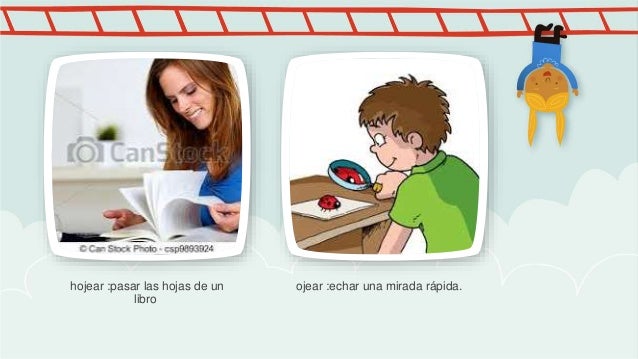
Hojea libros con ilustraciones junto al niño


Desde muy temprana edad, comienza a mostrarle libros como objetos amenos y entretenidos


Acepta los breves lapsos de atención de tu hijo; cada interacción de este tipo alentará en él el amor por los libros.

Read books with illustrations and pictures with your child. From an early age, parents should begin to show their children books as fun and entertaining objects. Accept the brief attention spans of your child; every interaction of this kind will encourage in him the love for books.


Observa, señala y luego identifica las imágenes


Los niños pequeños, cuando se inician en el mundo literario, aprenden primero a dar vuelta las páginas, luego a mirar los dibujos en forma general, después a observar dichas imágenes conforme se nombran, a señalar posteriormente los dibujos indicados y, por último, a identificar las ilustraciones por sí mismos.

¿En qué tramo de ese recorrido se encuentra el niño? ¿Puedes impulsarlo a que dé el próximo paso? No le exijas si no está preparado, sin embargo, puedes motivarlo a que siga adelante en caso de haber desarrollado las capacidades adecuadas.


Observe, point and then identify the images. Young children, when they begin in the literary world, learn first to turn the pages, then to look at the drawings in a general way, then to observe these images as they are named, to indicate later the indicated drawings and, finally, to identify the illustrations by themselves.

In what part of that route is the child? Can you push him to take the next step? Do not demand it if you are not prepared, however, you can motivate him to move forward if he has developed the right skills.


Léele al niño sobre cosas cotidianas


Lee las etiquetas de los alimentos, las señales de tráfico, los menús de los restaurantes. De esta forma, el niño asimila gradualmente la utilidad de las palabras, así como un creciente interés por ellas.

Read the child about everyday things. Read food labels, road signs, restaurant menus. In this way, the child gradually assimilates the usefulness of the words, as well as a growing interest in them.


Siempre lleva un libro contigo


Pon uno o dos libros de cuentos en el bolso de los pañales y en el automóvil, para los bebés más crecidos o los niños pequeños. El hábito de llenar cada momento de su existencia con libros y tenerlos siempre a mano sirve para que ellos se acostumbren a verlos como una parte normal de sus vidas.


Put one or two story books in the diaper bag and in the car, for the older babies or small children. The habit of filling every moment of their existence with books and having them always at hand serves so that they get used to seeing them as a normal part of their lives.


Id juntos a la biblioteca


Fija estas salidas con regularidad. Deja que el niño escoja un par de libros y tú también selecciona otros tantos. No te olvides de la hora del cuento. Incluso antes de que el niño pueda permanecer sentado durante todo el relato, él comienza a entender que ésta es una actividad especial y entretenida.

Go to the library together. Fix these outputs regularly. Let the child choose a couple of books and you also select many others. Do not forget the story time. Even before the child can remain seated throughout the story, he begins to understand that this is a special and entertaining activity.

Solicita un carné de lector en la biblioteca


En cuanto el niño cumpla 2 años, haz una visita especial con él a la biblioteca para solicitar su propio carné. Dale al carné un tratamiento acorde con su calidad de premio con una funda y un lugar especial donde guardarlo. 


Request a reader card in the library. As soon as the child turns 2, make a special visit with him to the library to request his own card. Give the card a treatment according to its award quality with a case and a special place to store it.


Aprende poesías y canciones

Los niños experimentan con los sonidos del lenguaje que rima, lo que aumenta su interés por las palabras y los sonidos. Las poesías acompañadas de gestos ayudan a relacionar las acciones con las palabras que las identifican. La poesía infantil también estimula este conocimiento y amor por el lenguaje. 

Children experiment with the sounds of rhyming language, which increases their interest in words and sounds. The poems accompanied by gestures help to relate the actions with the words that identify them. Children's poetry also stimulates this knowledge and love for language. 


Regala libros

Cada vez que tengas la oportunidad, regala un libro a cada niño que conozcas. Luego hojea el libro junto al niño. Mantén esa biblioteca en un lugar especial, pero accesible. 

Give books. Each time you have the opportunity, give a book to each child you meet. Then leaf through the book with the child. Keep that library in a special place, but accessible.

Friday, January 12, 2018

El Invierno - sonidos, letras y escritura

Another episode of letters, sounds, words,... in Dual-Language Prek. In this time we are working on the word "invierno". This word, "invierno" is part of our project with the same name.


Academic goal:
- to recognize letters based on their sounds(phonological awareness development)
- to order the positions of the letters to create a word- to develop reading skills
- to develop writing skills
- to have fun!


Materials and resources:
- PowerPoint
- ABC
- Picture of Winter
- Digital Board
- Notebook
- Pencil/crayons
- motivation to work together and help others!


Steps:
1) Introduce the picture
The teacher talks to the students about the picture.
Q: What can you see?
Q: Is it hot or cold?
Q: Which season is it: spring, summer, fall or winter?
Why?


Then, they draw and color a picture of winter.


2) ABC.

We say the ABC letter by letter in order with the help of all the students in the classroom.


3) Matching sounds with letters.
Now we focus on the word "invierno". We pronounce invierno for them.
Q: What's the first letter?
We start with the first letter: I
We check sounds and letters.
Q: Is this letter I?


Previously they drew 8 squares -as the ones (blue) you can see in the digital board-. One square for each letter of the word we are studying.
When we get a letter is time for them to write. It's important they follow the order of the sounds and writing.


Q: Where can I put the following letter?

We check if they understand the order of pronunciation and writing.

Q: What's the right order/position for this word?

The highest students, who can already read, help others to understand the letter-order-sequence to read and write.
We interact with them, like a game.

Q: What's the following letter?
(At this time I don't say the sound because one student already did it)
In case of confusion like the sound V and B, they have to use their memory.

They DO know that is V and not B.

We are forming a word TOGETHER!
It's a GREAT team!

It's important to read the sounds we are writing to help them understand we are creating the word.

First, the ones already written, and second the ones missing.
In this case we need an I, again we play with the possible mistake of using I or Y. They know well!

Sometimes they say other sounds/letters and we can play with them by trying to pronounce the word with their sounds.

Student: now we need a V.
Teacher: again V?
Do you say *"InviVerno"?
S: No!
Teacher: So, what's the next letter?
Student: Y!
Teacher: *"InviYerno"?
Student: Yes!
Teacher: We say "InvI-E-rno", so what's the next letter?

We must challenge them and help them too when they need it, they ARE learning (so are we, as teachers).
We can not forget that mistakes and errors are important elements in the learning process.


Student: E
Teacher: Well done! "InviErno"!
Working in whole groups help students who can not know something.

With the students' help learning is funnier and easier for them since they might not feel the pressure of being evaluated directly by the teacher.
We invite students to do what we, as teachers, are doing.

As you can see, our students are already trained to help others: positive classroom management, peer-peer relationship included.
First, it's recommended to offer them a model of how to do the activity. Then, they can practice with our guidance and help. This is what happening now during this scene.
The process of reading and writing is slow, so they must feel comfortable and sure of what they are doing.

Their self-image improves, therefore they feel motivated to keep on working by their own.


Thanks to all my Dual-Language Prek Students for their GREAT JOB everyday!
Mr Usero
Roosevelt ES
Houston ISD
2017-2018

Sunday, October 8, 2017

Reading 1 - What is reading?

What is reading?

"In order to wish to read, the child has to know that reading will be useful to him, he/she must be convinced that the whole world will have wonderful experiences, he/she will dissipate his/her ignorance, help him/her understand the world and direct his/her destiny
(Quintanal Díaz, 1999)

As a teacher reading is a very important activity that involves school and family, so I´ll write some posts about this importance of this activity. This first article is about the definition of reading and the fundamental ideas that complement this definition.

Many authors define reading, José Quintanal Díaz (1999) defines Reading as "an activity of the first order that should be strengthened and, above all, it is necessary to learn." (free translation from the original quote)

Bernal Pinilla defines reading as "the action of deciphering the symbols of a message; understand their meanings; relate them to known meanings, appropriate some new element and develop them through the process of creativity. " (Bernal, 2011: 6-8). And he explains it to us in the following way:

1. Action to decipher the symbols of a message.
Image result for children deciphering symbols cartoon

Image of a child deciphering symbols


The act of reading is free, and in that sense the reader exercises his will, fulfilling a wish. On the other hand, reading implies the action of recognizing the signs of the message, and in the first term, the fact of knowing them. Knowledge of linguistic symbols is usually acquired in the early stages of schooling. That is, according to Quintanal Diaz reading requires an effort on the part of the subject who intends to read. 


Children tend to instinctively reject what is expensive, so it is the teacher's job to sweeten that effort and that the task of reading for the student is interesting, stimulating, natural, free, playful and enjoyable. At home, his/her family can help with the same features (we´ll dedicate another post about the importance of reading at home and tools and resources to use at home)

2. Action to understand the meanings of the message.
The action of reading goes beyond the simple decoding of symbols, which is useless without a true understanding. The reading process has a second, important stage, which consists in interpreting, assimilating, and comprehension of the written message. A process that is only achieved when the reader learns as a child to correctly decipher the signs. That is why it is the teacher's task to deliver the student in his/her infancy varied, attractive, meaningful and pleasant materials. And, of course, encourage them to deepen, to imagine, to fantasize and to relate what they read with what they know, that is helping them make connections. Making connections with their reality will active their background knowledge to build the new contents. This idea is called "scaffolding", we´ve posted an article about this. By reading and its daily practice, children will have the ability to be immerse naturally, easily and without trauma, into ever more complex texts. And more importantly, to take advantage of them and enjoy them in depth.

3. Getting familiar with known meanings. 
We can affirm that reading is learned by reading, that is, with practice.
Reading is a process that feedbacks; the more reading, the better the reader gets more familiar with the new meanings to those he/she already knew. This creates the possibility of interpreting with greater clarity, ease, depth and enjoyment of the new readings.

4. Taking some new element. 
Reading has a great virtue from the point of view of information. Reading gives to readers new ideas and knowledge that become part of them: each text gives us the opportunity of integrating to our cultural background new knowledge and new possibilities to analyze aspects of life that begins to know through what is read.

5. Developing creativity.
During the first years of life, for children it is fundamental  the contact with nature, with peers, etc... But there is no greater stimulus for the development of our creativity than reading. That puts the human being in contact with a thousand and some realities that would otherwise be impossible to meet at such a young age. Reading, in addition, allows us to unlimitedly develop imagination and fantasy, fundamental ideas of all creativity.

Thursday, September 28, 2017

Biblioteca Online para leer en casa juntos


Actualmente con la tecnologia podemos tener acceso a muchos recursos, por este motivo les ofrezco este articulo.

Segun la informacion obtenida por la web oficial de HoustonISD, Frogstreet nos ofrece una gran variedad de recursos. El plan de estudios del distrito para prekindergarten está alineado con las pautas de pre-kindergarten establecidas por el estado de Texas. Los estudiantes de Prekindergarten reciben instrucción en todas las áreas de lectoescritura, matemáticas, ciencias, estudios sociales, desarrollo social y emocional, habilidades motoras gruesas y finas, salud, artes visuales, música y educación física.

Para acceder a las bibliotecas temáticas así como a las bibliotecas de matemáticas y ciencias en inglés y español, los padres pueden visitar http://portal.frogstreet.com/

Correo electrónico: parent
Contraseña: parent


El programa de Frogstreet:

  • Proporciona una instrucción completa e integrada en todos los dominios.
  • Equilibra la instrucción intencional con el aprendizaje centrado en el niño.
  • Proporciona equidad-inglés y español-de materiales e instrucción.
  • Ofrece una rutina diaria fuerte que desarrolla habilidades sociales y control emocional.
  • Apuesta por el poder de una fuerte interacción maestro-niño para desarrollar un rico lenguaje oral y un amplio vocabulario.
  • Proporciona una secuencia continua y sistemático para la construcción de habilidades y conceptos.
  • Usa los principios de aprendizaje basados ​​en la investigación como piedra angular de la instrucción.

Otras plataformas digitales que ofrecen lecturas online son:


Todas ellas con una gran variedad de historias, no todas ofrecen sus cuentos en ambos idiomas, pero igualmente es una oportunidad para pasar un rato divertido y leer en familia.
¿Cual fue tu historia favorita? ¿Por qué? 

Caracteristicas del estudiante que le gusta leer:


Como se ve en la imagen, los beneficios son muchos y se reflejan tambien en los resultados academicos, ya que la lectura amplia el vocabulario facilitando la comprension de la materia a estudiar. Otro aspecto muy importante en los estudiantes que le gustan leer -y su relacion con las buenos resultados- es su capacidad de explorar y descubrir cosas nuevas, ya que al comenzar la lectura de nuevas historias, nuestra curiosidad nos empuja a saber mas. Por consiguiente, nuestras ganas por saber se extenderan a otros campos de nuestra vida: la escuela.

Como resumen compartimos este video que habla sobre la lectura en familia.