Showing posts with label significant learning. Show all posts

Sunday, November 24, 2019

What is a 5-E model?

What is a 5-E model?


This model describes a teaching sequence that can be used for complete programs,
specific units and individual lessons. These strategies support the constructivist learning cycle,
which helps students create their own understanding of new experiences and ideas.


The 5-E model is a method for structuring a research-based teaching method is based on a
model developed by the Biological Sciences Curriculum Study (BSCS). This model employs 5Es:
engage, explore, explain, elaborate and evaluate, and is based on a constructivist philosophy of
learning. 


In this learning philosophy, students build or develop their own understanding of new ideas based
on what they already know. Each E represents part of a sequential instruction process or learning
cycle designed to help students build their own learning experiences and the final understanding
of the topic or concept. 

The 5 E model represent the five stages of the teaching and learning sequence: 
  • Engage,
  • Explore, 
  • Explain, 
  • Elaborate
  • and Evaluate. 

ENGAGE 
  • Engage-Achieve student interest and have them personally participate in the lesson,
and at the same time, make an assessment of prior knowledge. 

  • During this stage, students are presented with an educational task. 
  • They make connections between past and present learning experiences, and think about
what they will learn during the next activities. 

  • The 5 E model activities are designed for students to participate through activities and
experiments, plans class stimulate students' curiosity and encourage them to ask their own questions.
  • Teachers:
    • At this stage, teachers present a topic or concept with a question or demonstration
    • fascinating, intriguing and challenging designed to capture student interest, curiosity,
and attention.

    • At this stage, teachers do not seek a "Correct Answer"; Instead, they encourage
students to talk about what they already know about the subject (or think they can know) and
discuss what else students would like to know.


EXPLORE
  • Exploration makes students get involved with the topic so that they can develop their
own understanding.
  • Exploration experiences provide students with activities that help them identify and improve
current concepts (i.e., misconceptions), processes and skills. 
  • Students have practical fun in laboratory activities that help them use their prior knowledge
to generate new ideas, explore questions and possibilities, as well as design and conduct preliminary
research. 
  • The teacher acts as a moderator, delivering materials and guiding the students.
  • Teachers:
    • During the exploration, students perform various activities to solve problems or
practices and experiments designed to help them explore the topic and make connections to
concepts related, often within groups or teams. 
    • During this stage, students share experiences common, while the teacher acts as a
facilitator, providing materials as needed and guiding the students' approach.


EXPLAIN
  • This stage provides students with the opportunity to communicate what they have learned
and understand what it means. 
  • At this stage, students begin to communicate what they have learned by demonstrating their
understanding of conceptual, process skills or behaviors. 
  • Students share ideas with each other and with their teacher, who provides an explanation of
the curriculum that is made to guide them towards a deeper understanding. 
  • These segments present vocabulary in context and correct or redirect the wrong concepts.
  • Teachers:
    • At this stage, teachers help students observe patterns, analyze results, and/or draw
conclusions based on their activities and research. 
    • Teachers also define vocabulary that is relevant.

ELABORATE
  • This stage allows students to use their new knowledge and continue to develop a deeper
and broader understanding.
  • During the elaboration, the students expand the concepts they have learned, make
connections with other related concepts and apply their knowledge to the world around them
through additional activities. 
  • Teachers:
    • Teachers challenge and expand knowledge and students' conceptual skills.
    • At this stage, the teachers help students make connections based on the concepts
or ideas they have learned previously with other related concepts and new situations.


EVALUATION *
  • Evaluate how much learning has been achieved. 
  • The evaluation phase helps students and teachers assess how much learning and
understanding has been achieved. It allows teachers to evaluate progress
  • Students with respect to the achievement of educational objectives.
  • Evaluation and assessment can occur at any time during the educational process.
  • Teachers:
    • In the final stage, teachers evaluate or value the students' understanding of the
subject studied. 
    • This assessment can be formal or informal, but it must demonstrate a clear
understanding of what students have learned throughout the lesson.


Saturday, April 1, 2017

El Andamiaje (scaffolding) en el aprendizaje y AICLE

La idea de andamiaje o scaffolding esta muy unida al término AICLE. El andamiaje no es sólo una parte importante de la educación en general, sino que su uso es aún más importante en un entorno de aprendizaje de idiomas con este tipo de metodologia.

Image result for Andamiaje e idiomas actividades

¿Qué es andamiaje?

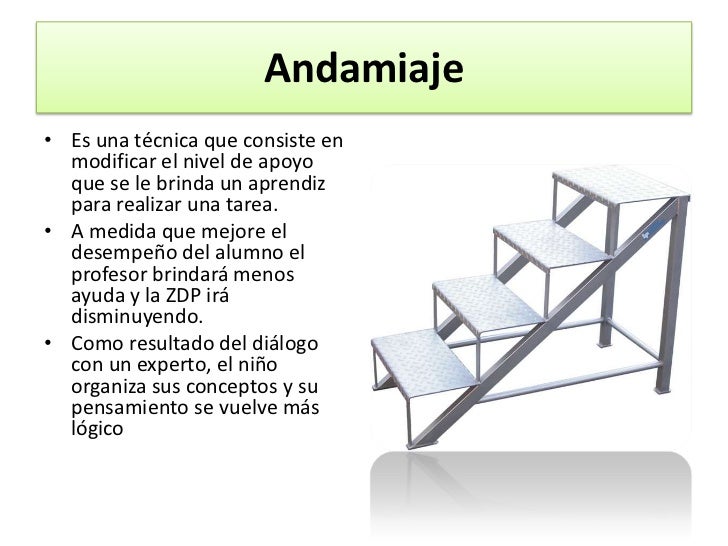
La idea de andamiaje o scaffolding se basa en el trabajo de Wood, Bruner y Ross (1976) y Vygotsky (1978). Los constructores usan andamios temporales para sostener un edificio durante la construcción, y luego - una vez que el edificio puede estar solo - el andamio se retira. 
Related image
En otras palabras: Andamiaje es el proceso que realizan los estudiantes, durante su proceso de aprendizaje, donde gradualmente van construyendo su nuevo conocimiento y que despues se disponen a eliminar, dicho apoyo, a medida que sus estudiantes se vuelven más independientes.

Andamiaje y ayuda son conceptos distintos, ya que el proceso surge en el estudiante, en su proceso de investigar y averiguar una respuesta por si mismo.

El andamiaje y los estudiantes

El proceso de andamiaje ayudará a los estudiantes a comprender nuevos conceptos y desarrollar nuevas habilidades de una manera más rápida. Es importante partir de una base, ya que si sus estudiantes carecen de cualquier tipo de estructura, fracasarán en su proceso de aprendizaje.

En base a la idea de estructura, es muy importante comprobar el nivel de conocimiento y/o destrezas de nuestros estudiantes para poderles ofrecer un aprendizaje realmente significativo. Por este motivo, se realizan las pruebas de evaluacion inicial para saber de donde partimos y asi poder tener la informacion necesaria para una planificacion acertada y motivadora, y por supuesto centrada en nuestro alumnado y sus necesidades.


Related image

Andamiaje y refuerzo

En ocasiones nuestros alumnos necesitan un refuerzo o apoyo visual que les recuerde a afianzar los contenidos, por este motivo, le recomendamos usar posters que resuman o representen esquemas de lo que se esta aprendiendo. Ademas de ayudarles a recordar, mejorara su nivel de confianza en clase y se sentiran mas motivados a la hora de participar. 

¿Haces mapas mentales o posters-resumen de lo que aprendemos? ¿Compartes algunos en los comentarios?


Lenguaje y Aprendizaje


La idea de andamiaje se puede llevar a cabo en todo el proceso de aprendizaje de los estudiantes, independientemente si lo que aprendemos es un idioma o una asignatura. Al ser un articulo dedicado a AICLE nos centraremos en los aspectos que estan relacionados con los idiomas. El andamiaje de un lenguaje puede llevarse a cabo dando y mostrando ejemplos de frases y oraciones, al igual que poder dar ejemplos en las actividades que se propongan.

En relacion al refuerzo que hablamos anteriormente, cuando se le pida a un estudiante que explique algo, proporcione previamente una explicación y un ejemplo. Esto les ayudará para que se sientan mas seguros, y por consiguiente, se sentiran mas motivados en la participacion en clase. Ademas, p
roporcione preguntas de ejemplo para que sus estudiantes pregunten en caso de que no entiendan algo. 

En las clases de idiomas se pueden crear soportes visuales que ayuden en la instrucción, por ejemplo: proporcionarles los pasos a seguir en cada tipo de actividad con dibujos y palabras sencillas (en los niveles de principiante). Si en algún momento los estudiantes no pueden entender qué hacer, puede señalar los pasos y preguntar si los han seguido. Tambien les puede dar la oportunidad a los propios estudiantes que se encarguen de este poster.


Entonces, ¿qué puedes hacer para "andamiar" o "scaffold" tus unidades didacticas? Aquí algunos ejemplos y tecnicas, aparte de mas informacion sobre el aprendizaje de idiomas y sus culturas:


¿Cómo vas a aplicar el andamiaje en tus secuencias de aprendizaje? ¡Comparte, por favor! Asi aprendemos todos ;)
Licencia de Creative Commons
Este obra cuyo autor es http://maestrousero.blogspot.com/ está bajo una licencia de Reconocimiento-NoComercial-CompartirIgual 4.0 Internacional de Creative Commons.