Showing posts with label immigration. Show all posts

Monday, September 24, 2018

Urban education reflections - week 4


Last week, the meeting was really interesting because they showed us different ways of dealing with urban education issues. Both of them shared something: activism. I think that this part is very important to make an impact in our societies, professionals with a great heart full of compassion for others, giving them a voice, the most unprotected people in our society: poor, immigrant and refugees. In relation to this point I want to share with you this article:

Pakistani Nobel Laureate Malala visited Mexico, she was invited by the Mexican university to talk about review the importance of education and culture in the development of the society. Malala also referred to the educational issue, stating that "without education we can not move forward" and showing outrage at the treatment of some nations in this basic human right. "I do not understand why some world leaders do not understand yet how important it is to invest in education," said the Pakistani activist. "When you educate a child you give him resources, you help him grow", she concluded.

In recent decades, interpretations of disparities in education have changed from a one-dimensional approach to a multidimensional and interactive one. It is widely observed that the social and cultural differences of the students condition their educational progress and the results they obtain. The OECD report (1995) on students at risk points out seven predictors of low-academically-performance schools that are closely related to social disadvantage: poverty, belonging to an ethnic minority, immigrant families or without adequate housing, ignorance of the majority language, type of school, geographical place in which they live and lack of social support. However, the report states that there is no strict correspondence between social and educational disparities. There are other factors, such as the family, the education system and the school itself that can increase or decrease these inequalities.

Then, according to the Education that was set by the industrial era the educational model created responded to the needs of society. In the industrial era, schools were designed as economic engines to supply professionals to an industrial society, based on production and mass consumption. The educational system assumed the typical values ​​of industrial organization: hierarchy, planning, control and standardization. In essence, students were trained to do what they were told to do. They spent several years memorizing the greatest possible body of knowledge to exploit it later, throughout their professional stage.

There were many attempts to change the ‘industrial’ concept of education but there are many other factors in education that prevent the change. The stability in the school structure, that is the roles of students and teachers, and families of course; others factors of stability are the contents of the curriculum (in 100 years they have not changed) they added some new tools like technology but there are no great changes because they are reinforced by the textbooks and the standardized tests. According to Eisner in his article “Who decides what schools teach?” he analyzed all those factors and they reflected the conservatism and the need of stability that most part of society expects of education.

UNESCO published The fight against exclusion in education that is a guidance for teachers to deal with inclusion and attending diversity in classrooms. There are some important factors that help us understand the inclusive education:
  • -          Attention to diversity. Each student is “diverse” and has specific and individual characteristics and needs that are to be attended from an educational perspective. Diversity is understood as the opportunity to learn, as a mutual benefit to all the members of the educational community.
  • -          Flexibility: diversity leads us to personalized or individualized learning which focuses on the individual characteristics of the students (their weaknesses and strengths). Their learning must be open and flexible to give them opportunities for learning.
  • -          Support: providing the resources and tools that each student needs to learn. The support has to come from the classroom with the students and teachers as well as from the school community with the help of other professionals.
  • -          Teachers: their role is like a guide or facilitator of knowledge, opportunities, supporter, bridge between student-family-school, who enhances values like tolerance, respect,…
  • -          Participation and collaboration: a pro-active participation of all the members of the community is necessary to be successful in education. It is very important to create a sense of belonging and commitment.
There are more points that help to understand diversity in education, inclusion and its reflection, but I’ve summed up the ones in relation to students’ learning and the roles of teachers since in our task we are asked to answer as “an urban teacher”. I believe in an education that help all the students to be successful as well as the understanding of their families. Nowadays with the use of technology like the digital devices and social media is easier to connect with everyone and call them for participation. As an urban teacher I did it and the results were awesome, indeed the school where I was working before is still working with social media to engage families.
   
    To get a good participation I faced lots of “obstacles”. There are some obstacles coming from the school staff, other teachers and bureaucracy of the district: some of the teachers couldn’t understand how social media could use for engaging families and improving the participation in the school, the administrators were more focused on numbers and they didn’t want to know anything but results, many times the school staff didn’t provide the information so it was difficult to provide exact and precise information.
     
     Other obstacles came from the families, many of them thought about social media like something bad because they were convinced by the news on TV about the risks of social media and its exposure. For some parents, as well as for school staff and administrators, to deliver information through digital devices were not enough, they needed a hard copy of the same information. Most of parents were not familiar with educational apps. To find some solutions I invited them to an open house session where I trained them how to use “Facebook” app for educational purposes and showed them all the possibilities of improvement in communication: easy and fast communication, photos and videos,…


Thursday, September 20, 2018

Immigration and Education: one event at Childrenatrisk.org - Houston, TX

Today I attended one conference with a relevant current topics for our urban school communities: Immigration and Education.
https://childrenatrisk.org/event/immigration-and-education-enforcement-and-impact/

Migration represents an important part of human nature. It is a phenomenon that through the years, has adopted very complex ways. Direction of migrations has been determined by the need of adequate resources, tools and places for the development of human beings. However, in further phases, migrations were influenced by territorial expansion and also economic and political interests, which are characteristic of the latest migration movements.

Among the main causes that promote migration both internationally and internally (inside one country) according to the United Nations (2012) are:

• The search for a better life for oneself and one's family;

• Solving disparities between different regions and within the same region;

• The labor (work) and migratory policies of the countries of origin and destination;

• Political conflicts (which promote cross-border migration, as well as movements within the same country);

• The degradation of the environment, including the loss of farmland, forests and grasslands (environmental refugees, for the most part, go to cities instead of migrating abroad);

• The migration of professionals, the most educated young people to fill the gaps in the workforce of industrialized countries.

As can be seen in the causes that promote migration are of economic aspect above all but also, environmental and professional improvement, we could also add that migrations occur as a result of wars, nuclear tests carried out by developed countries ", the elaboration of migratory policies as it is the case of the government of the United States of America.

Recently, the construction of barriers complemented by the use of sophisticated security technologies -of exclusive military use- emerges as the most used migratory control provision ... These barriers serve to satisfy the interests of certain social and political sectors of the North, through the exacerbation of nationalist and chauvinist and xenophobic feelings. Far from stopping migration, the construction of walls on the borders of receiving countries such as the United States and other countries, generates high costs, both material and social, for the populations and communities on both sides, as well as for migrants to travel on new ways that are very dangerous routes.


Immigration and Education

Districts and schools, given their important function, from the educational point of view, are spaces that provide children with the necessary tools and resources for life. Therefore, the districts and particularly the school (and school community) presents a great importance for the development of children at a cognitive and a fully integrated level, which will affect throughout their lives and will depend largely on the strengths and weaknesses, as well as their ideas presented by future those men and women. In this sense, a challenge for education is presented, given the increase in migratory flows and their respective consequences for children who leave their places of origin and for those who remain "alone" as a result of the migration of parents, for such reasons, the role that teachers and educators must play in the care and treatment is very important. 

It´s the responsibility of our society and their educational institutions, as well as those with social services to help to facilitate the "participation of different identities" that is, deal with the multi-diversity (we understood "multi-diversity as the social, economical, linguistic, cultural diversity among others), contributing to its development, for this inter/multicultural education must play a fundamental role from a broad conception of curricular design and development, to ensure that children can best accept diversity on the one hand; On the other hand, teachers must be formed and, consequently, adopt the necessary strategies to cover other types of problems such as school performance, interpersonal relationships, the different learning problems of each child to achieve the most harmonious integration possible.

Teachers are the true agents of transformation and educational change, who can directly and actively interfere in the achievement of an adequate integration of the immigrant population, as well as those children who remain abandoned in places of origin.

Talking about teachers, I was there, at the conference and no many teachers were found in the room. At least two people wanted to share their tips and experiences:


After researching about this topic and that conference, my questions and doubts are:
HISD has a school for newcomers "Las Americas", but what about the rest of schools, do they have resources? are their teachers prepared and formed to deal with diversity? 
There was one surprise, when the presenters asked for teachers in the room, nobody answered. WOW! Do districts and the system consider teachers as relevant tranformational agents of our societies?  Why don´t teachers attend events like this: immigration and education? Knowing that Houston has a high percentage of immigration. We learned that in Houston there are more than 600,000 undocumented immigrants.
Why don´t districts and other educational institution offer more professional development trainings/courses to help teachers understand diversity better and provide them with strategies? 
Do other social and political powers do enough to give answers to this issue: immigration and education? Why don´t they do more partnerships and networking? 


Sunday, September 16, 2018

Reflections - week 3 - Urban Education

The assignments are:

1. choose 2 - 3 unique features listed on pages 4 - 8 of ch 1. Reflect on your ideas and issues with these features. What are your personal experiences and implications for urban education in the 21st century. 

2. See pp. 32 - 34, etc. How do the concepts of cultural competence, critical literacy, and critical consciousness connect with ideas and issues in urban education? What are possible practical contexts regarding these ideas? 

3. See the last paragragh on ch 2 - pp 38 and 39. How does this statement link to your thoughts regarding urban education? 


1. The features that I chose are the following: 

- Urban areas and urban schools have a higher rate of ethnic, racial, and religious diversity. 

The frustration of such teachers and staff members is exacerbated by the perception that few care about the well-being and the success of these students”. 

- Urban schools serve higher immigrant populations

Along with these voluntary immigrants, urban schools serve students whose ancestors were involuntary immigrants who share a history of discrimination and injustice. Each of these groups experiences problems unique to its background, and urban educators need to understand and know how to address these concerns". 

- Urban schools are characterized by linguistic diversity.

Because of their large immigrant populations, urban schools have more students speaking different languages." 

I chose these three unique features because they are related to diversity: cultural, socioeconomical, linguistic and others. I found an article “Immigrant Children” by Child Trends.org that is related to this idea of diversity that shows the number of first- and second-generation immigrant children in the United States. This number grew more than the double in less than 20 years. 

The population of first- and second-generation immigrant children in the United States grew by 51 percent between 1995 and 2014, to 18.7 million, or one-quarter of all U.S. children.” 

Urban school students are unique, it means that every student has a special background (I want to clarify the use of "special", this adjective in this sentence has the meaning of something that is not usual or common, and it does not imply something negative). As for me, diversity is something positive, something that adds more value to what we have since this value lies on the little pieces that form that specific part of our urban society: their language, their culture, their interaction with others. Putting all these ingredients together they are creating a new “culture” with different things. 

On page 9 we can read the last paragraph about the “context of hope”, giving a new “label” to those students “at risk”: “of resilience”. There is a positive approach that tries to formulate programs that focus on their strengths instead of their deficits. Besides, urban teachers can work to connect students to unique urban resources such as museums and other sociocultural spaces in the city that can be part of the learning resources to improve the lives of poor urban students. 

One of our classmates once shared an article about the formation of teachers dealing with diversity. Are they really prepared to face diversity in schools? According to the most recent studies, white teachers are predominant in our classrooms… 


What kind of teachers are necessary for an inclusive society in the 21st century urban school? 

What are the essential skills or knowledge of an urban school teacher in inclusive education? 

What values ​​and areas of competence should be developed within their professional development? 


Although inclusion can be promoted by public authorities through legal prescription, it is the teachers' attitudes, perceptions and practices that respond to the needs of their students, the essential dimensions to determine the success of inclusion in their classes in urban schools. 

But if we ask an urban teacher about all the work that they have to do is the same: long hours working on papers, lack of resources, lack of support by the educational institutions, lack of participation in the school community, among other answers. Despite all that, in general, urban educators have a positive thinking about school inclusion. 

Consequently, a thorough analysis of the educational practices themselves is necessary. Knowing that some factors are effectively outside the scope of the urban school teacher such as poor materials or lack of them, large classes..., however many others are found in the organization of urban school classrooms: decontextualized curriculum, poorly prepared lessons, use of a very scientific language, prejudices… 

Changing the perspective, if we work on the gap between the reality and the “ideal” expectations, that is, with the characteristics of the reality that the school intends to prepare the students and the one that actually expects. For Ainscow, it is about recognizing existing practices and knowledge as starting points for a process that considers differences as opportunities for the overall improvement of education, which will benefit the whole school community. 

By analyzing those practices, a good urban school can identify and share good practices, identify the barriers to the participation and learning of some students, and reflect on all this and search for solutions. 

Therefore, it is necessary to recognize the teachers´ mindset about the school and inclusion of diversity, identify the different forms of relationship established by teachers with multi-diverse children, and review teachers' attitudes towards those children. The ideas and beliefs that the teacher has in relation to those “multi-diverse” students will be reflected in the attitude that evidences their classroom management and teaching work. In this way, the role of teachers in the urban school setting is seen as essential in this process. The personalized attention, the permanent support, the motivation that is offered to the child and the challenging activities are indispensable to foster a positive self-esteem and the achievement of learning by those students. 

After that we can identify three basic elements that good teachers have, in urban schools: 

- Behaviors and values. 

- Knowledge and understanding. 

- Skills and abilities 

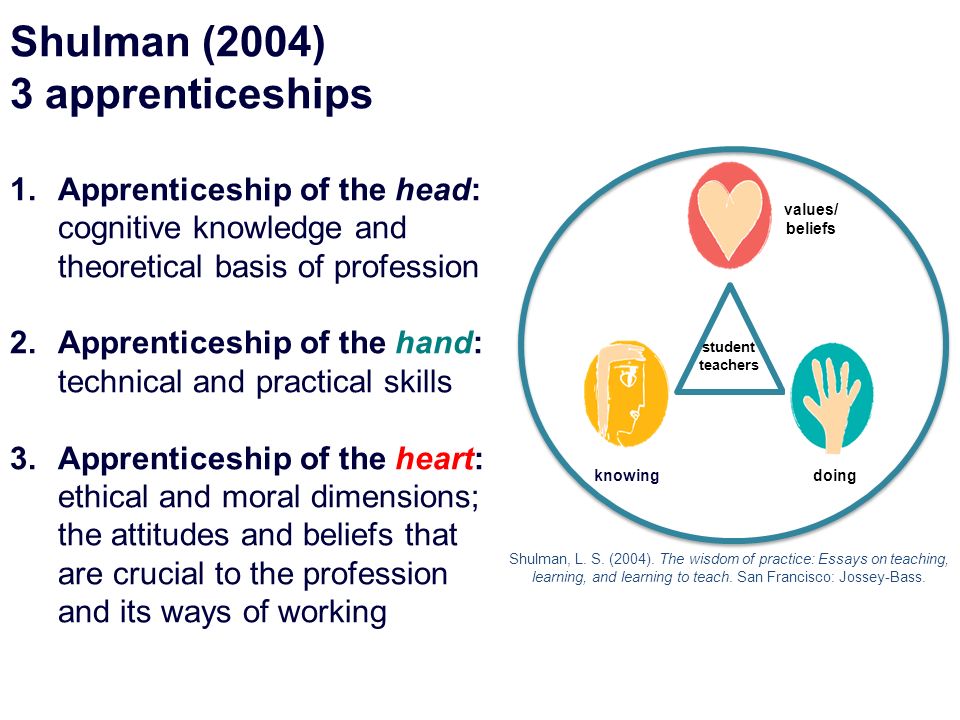
This approach is based by Ryan´s idea of “multidimensional traits” (2009), but especially in Shulman (2007), which describes professional learning as a learning of: 

The head (knowledge), The hands (skills or practices), and the heart (behaviors and beliefs). 

http://meridianschool.org/wp-content/uploads/2014/12/infographic-HeadHandHeart.gif

According to these criteria, the professional development of urban school teachers should include: 

- Continuous formation and innovations in pedagogy: Variety of methods and resources, new ways and formulas of evaluation. The curriculum is not ended or limited to the classroom setting, but extended to the whole community and neighborhood. Flexibility in programming. 

- Education in values: Ethical principle of research and work in the classroom that improve inclusion processes and procedures 

- Technology as a support of family-school relationships: improvement of the communication with students´ families. Democratic school: take into account the interests and opinions of students and their families. 

- Proactive attitude: Be involved in school management, problem-solution skills. 

- Facilitator: Promote autonomous student work. Teamwork: Cooperation and disciplinary integration 

- Learning opportunities seeker: Create situations in which students can not escape without learning and develop cooperative work environments. Significant learning: Use knowledge as motivation, not as a goal 

If they can receive this kind of formation, the urban schools can: 

- Improve teacher education systems, 

- Ensure the quality of teacher educators 

- Improve the skills of teacher educators 

- Promote professional values ​​and behaviors 

- Improve the quality and quantity of continuous professional development 

By doing so, we will be able to find a different profile of urban school teachers such as: 

- Social change agent: It assumes and defends the need for educational and social change. 

- Critical professional. 

- Solidarity and cooperative: Expert in energizing groups and teamwork. 

-Initiative and voluntariness. 

- Good communicator (Confidence, reliability, respect, tolerance). 

- Academically well-formed and updated. 

- Dedication. 

Future Urban school teachers must understand the complexity of teaching and learning in urban schools and the multiple factors that affect them. They must recognize that they should not be passive consumers of a defined curricular content. In a way, these ideas seem very simple, but they imply a powerful and complex message for all the people involved in the educational endeavor of urban schools. Teaching can not be reduced to a list of demonstrable skills or knowledge that can be acquired through “standardized” tests. 


References: 

Ainscow, M. (2013) From exclusion to inclusion: ways of responding in schools to students with special educational needs. CfBT Education Trust. Retrieved from https://files.eric.ed.gov/fulltext/ED546818.pdf

Crosnoe, R. (2013) Preparing the Children of Immigrants for Early Academic Success. Washington, DC: Migration Policy Institute. Retrieved from https://www.migrationpolicy.org/research/preparing-children-immigrants-early-academic-success

Ainscow, M. & West, M. (eds) (2006) Improving urban schools: leadership and collaboration. Buckingham: Open University Press

Soojin, S.O., North, C. (2011) Immigration, Youth, and Education. Harvard Educational Review. Retrieved from http://hepg.org/her-home/issues/harvard-educational-review-volume-81-number-3/herarticle/editors%E2%80%99-introduction_826

Schaffer, Connie, "Urban immersion: Working to dispel the myths of urban schools and preparing teachers to work with diverse and economically disadvantaged students" (2012). Teacher Education Faculty Publications. 69. https://digitalcommons.unomaha.edu/tedfacpub/69

Ahram, R., Stembridge, A., Fergus, E., Noguera, P. (2016) Framing Urban School Challenges: The Problem when Implementing Response to Intervention. RtI Action Network. Retrieved from http://www.rtinetwork.org/learn/diversity/urban-school-challenges